
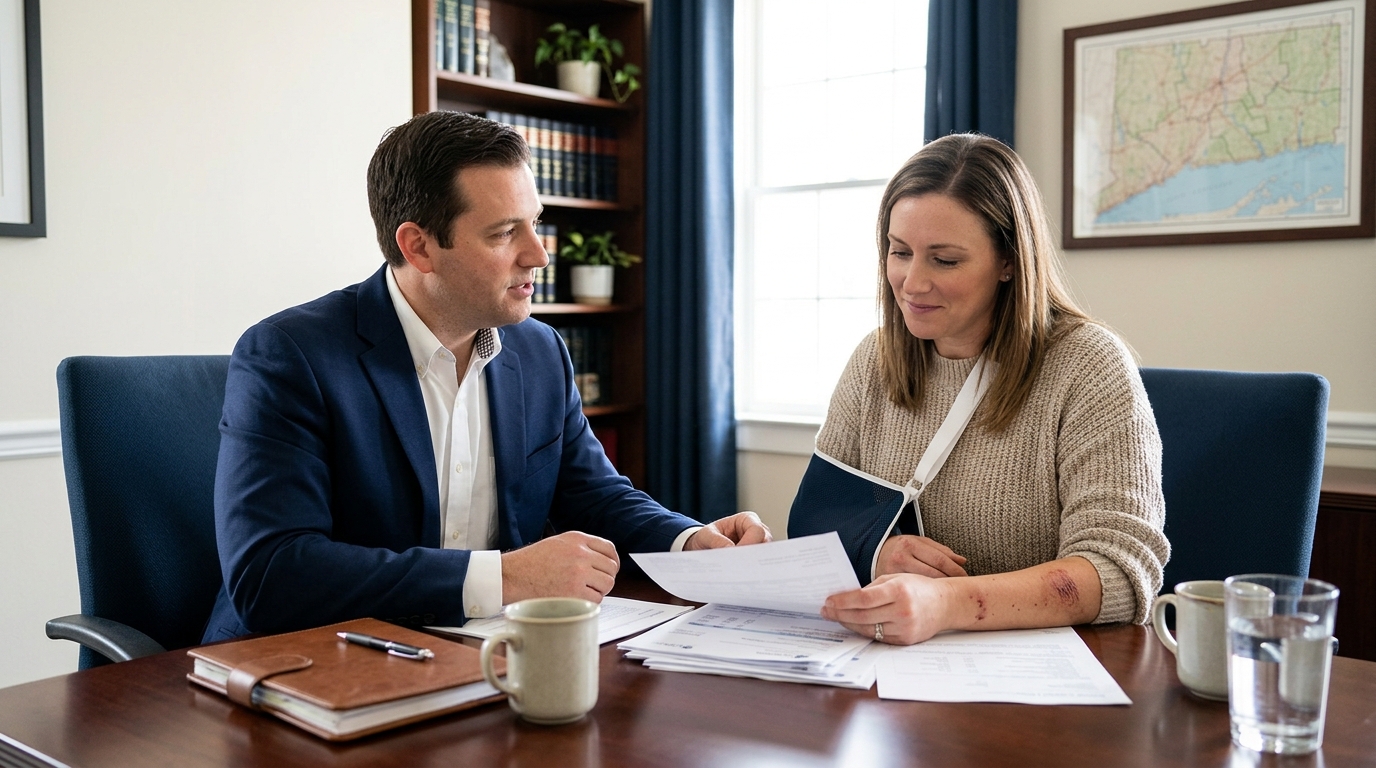
Who Pays Medical Bills After a Connecticut Car Accident?
After a collision, medical care often becomes an immediate concern—along with the question of how those expenses will be paid. The answer to who pays medical bills after a Connecticut car accident depends on the circumstances of the crash, the insurance policies available, the nature of the injuries, and whether another party may be legally responsible.
At LVSK, we help injured people in Waterbury, Bridgeport, Torrington and all across Connecticut and we understand the potential sources of payment for medical bills after a crash. While every situation is different, acting promptly, preserving records, and understanding the interaction between insurance coverage and an injury claim can help protect your options.
Why Medical Bills Can Become Complicated After a Crash
Emergency treatment, diagnostic imaging, surgery, physical therapy, medications, follow-up appointments, and specialist care can create substantial expenses. Even when another driver appears to have caused the collision, that driver’s insurance company may not pay medical providers as treatment occurs. Liability claims often take time to investigate, negotiate, and, in some cases, resolve through litigation.
For that reason, an injured person may need to use available first-party benefits or health coverage while a claim against the at-fault driver is pending. An experienced and professional car accident lawyer can review the available coverage, explain potential responsibilities, and help organize the documentation needed to support a claim.
Health Insurance May Cover Treatment First
For many people, health insurance is an important initial payment source for accident-related care. Private health insurance, employer-sponsored plans, Medicare, Medicaid, and certain other benefit plans may pay for medically necessary treatment subject to deductibles, copays, network rules, authorization requirements, and policy exclusions.
Using health insurance does not necessarily prevent an injured person from pursuing a claim against the driver who may have caused the accident. However, the insurer or benefit plan may later assert a right to reimbursement from a settlement or recovery. These rights can be governed by the policy, plan documents, and applicable law, so they should be reviewed carefully before a case is resolved.
Medical Payments Coverage May Be Available
Some auto insurance policies include medical payments coverage, often called MedPay. When available, this coverage may help pay reasonable medical expenses for the policyholder and qualifying occupants after a collision, regardless of who caused it. The amount of available coverage and the types of expenses covered depend on the policy language.
MedPay can sometimes assist with immediate bills, deductibles, copays, or other eligible costs. It is not included in every policy, and it may have limits or conditions. We can help clients review their own auto insurance documents and identify whether this coverage may be relevant.
Workers’ Compensation May Apply to Work-Related Crashes
If a motor vehicle collision occurred while someone was performing job duties, workers’ compensation benefits may be a possible source of payment. For example, a person may be driving between job sites, making deliveries, attending a work-related meeting, or completing another task for an employer when a crash occurs.
Depending on the facts, workers’ compensation may provide benefits for authorized medical treatment and a portion of lost income. It may also involve questions about whether a claim can be made against a third-party driver who contributed to the collision. A workers’ compensation lawyer can assess the work connection, insurance issues, and potential coordination between claims.
Liability Insurance May Pay Through a Personal Injury Claim
When another motorist’s negligence may have caused the crash, that person’s bodily injury liability insurance may be a potential source of compensation. A claim may seek payment for medical expenses, lost wages, pain and suffering, and other legally available damages. The available policy limits, evidence of fault, severity of injuries, and other case-specific factors can affect the claim.
In some circumstances, uninsured or underinsured motorist coverage may also be important. This coverage may apply when the responsible driver has no insurance, cannot be identified after a hit-and-run, or has coverage that may not be sufficient for the losses involved. Policy terms and the facts of the accident matter greatly.
Our Connecticut motor vehicle accident attorneys work to investigate the collision, gather medical documentation, identify potentially applicable insurance coverage, and communicate with insurers on behalf of our clients. We do not make promises about results, but we provide clear guidance and dedicated advocacy throughout the process. We dig into the details so that you and your family are protected.
Medical Liens and Reimbursement Claims Require Careful Attention
Medical bills after a crash are not always resolved simply because a settlement is reached. Health insurers, government benefit programs, medical providers, workers’ compensation carriers, and other entities may assert liens or reimbursement interests. A lien is generally a claimed right to repayment from money recovered in an injury claim.
These issues may arise with Medicare, Medicaid, ERISA-governed health plans, hospital liens, workers’ compensation benefits, and certain private insurance arrangements. The validity and amount of a reimbursement claim can depend on the relevant law, policy language, billing records, and the facts of the case.
Before accepting a settlement, it is important to understand which medical expenses were paid, which balances remain outstanding, and whether any lien or reimbursement interest must be addressed. Our personal injury lawyers help clients evaluate these issues so that there are fewer unexpected financial questions at the end of a case.
Steps to Take When You Receive Medical Bills
Medical billing paperwork can feel overwhelming while recovering from an injury. Taking organized, practical steps may help preserve important information.
- Seek appropriate medical attention and follow treatment recommendations.
- Keep copies of bills, explanation-of-benefits statements, prescriptions, receipts, and correspondence from insurers.
- Notify your health insurer and auto insurer of the accident when required by the applicable policy.
- Do not assume a bill is incorrect or that another insurer has already paid it; review it and ask questions when needed.
- Avoid signing broad releases or agreeing to a settlement before understanding the full scope of your treatment and potential repayment obligations.
- Consult an experienced trial lawyer if you have questions about fault, coverage, liens, or a proposed insurance settlement.
How We Help Injured Clients in Torrington and Beyond
At LVSK, we recognize that an accident claim is not only about paperwork. It is about helping people obtain answers while they focus on recovery. Our Connecticut injury law firm assists clients with insurance communications, accident investigations, medical-record collection, claim preparation, and the evaluation of potential sources of payment.
Our firm has appeared in court across the state. We serve individuals and families throughout Litchfield County, Hartford County, Fairfield County and New Haven County. Whether a crash occurred on a local Torrington roadway, a highway serving Hartford, or a route connecting communities in New Haven County, we approach every matter with careful attention to the individual facts.
Frequently Asked Questions
Do I have to pay my medical bills while my car accident claim is pending?
Possibly. Providers may expect payment under their ordinary billing procedures, even if an injury claim is ongoing. Health insurance, MedPay, workers’ compensation, or other coverage may be available depending on the circumstances. It is important not to ignore bills or insurance correspondence.
Will the at-fault driver’s insurance company pay my doctors directly?
Not always. The insurer may investigate liability and damages before making an offer or payment. In many cases, medical expenses are initially handled through health insurance or another available benefit source while the liability claim proceeds.
Can I use health insurance if another driver caused the crash?
In many situations, yes. However, your health plan may later seek reimbursement from an injury settlement or recovery. The specific rights and obligations depend on the plan and the facts of the case.
What if the crash happened while I was working?
Workers’ compensation benefits may be relevant if the collision was connected to your job duties. There may also be a separate claim against another driver. A careful review can help determine which options may apply.
What if my medical costs exceed the other driver’s policy limits?
Additional coverage, including uninsured or underinsured motorist coverage, may be worth reviewing. The availability of other sources of recovery depends on the policies involved and the particular facts.
Speak With Our Team About Your Options
Questions about who pays medical bills after a Connecticut car accident deserve individualized attention. If you or a loved one was injured in Torrington or a nearby community, contact LVSK at (860) 733-6504 for a free case evaluation. We can discuss the circumstances of the crash, review potential insurance issues, and help you understand the next steps.
This article is provided for general informational purposes only and is not legal advice. Insurance coverage, liability, liens, and available remedies depend on the specific facts, applicable law, and policy terms. Speaking with a qualified attorney about your individual situation may be appropriate.