
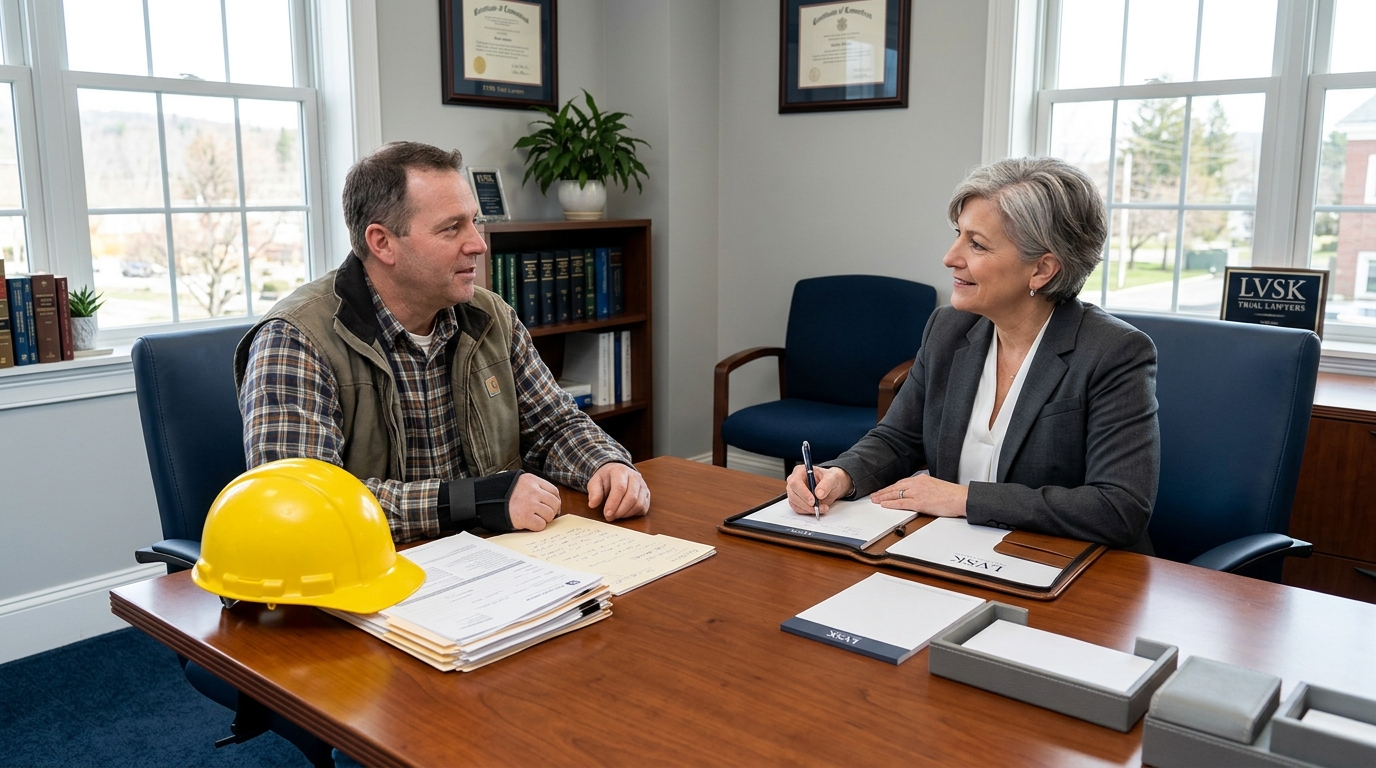
Connecticut Workers’ Compensation: Reporting a Workplace Injury and Protecting Your Claim
Quick Summary: After a workplace injury, prompt action can help protect both your health and your ability to pursue workers’ compensation benefits. Reporting the injury, documenting medical care, following treatment instructions, and retaining important communications can all be important steps. At LVSK, we help injured workers in all corners of the State of Connecticut and we understand the issues that may arise in a Connecticut work injury claim.
A job-related injury can leave an employee managing pain, medical appointments, lost time from work, and uncertainty about what comes next. While every situation is different, workers’ compensation is generally intended to provide certain benefits to employees who suffer qualifying work-related injuries or illnesses. Knowing how to report a workplace injury in Connecticut and how to keep accurate records can make the process more manageable.
Report a Workplace Injury as Soon as Possible
One of the most important early steps after an accident is notifying an employer or supervisor. A worker may be tempted to wait, especially when an injury initially seems minor. However, some conditions become more serious over time, and a delay can create questions about when, where, or how the injury happened.
When reporting a workplace injury in Connecticut, it is often helpful to give a clear, factual account of the event. This may include the date, time, location, work activity being performed, body parts affected, and names of any witnesses. Employees should avoid guessing about medical conclusions or minimizing symptoms simply to return to work quickly.
Whenever possible, it can also be useful to keep a personal record of when the report was made, who received it, and whether a written incident report was completed. This information may become relevant if there is later disagreement about notice or the circumstances of the injury.
Seek Medical Attention and Create Clear Documentation
Medical documentation is a central part of many Connecticut work injury claims. Prompt evaluation can address immediate health concerns while also creating a record that connects symptoms and treatment to the reported workplace incident.
During appointments, workers should describe symptoms honestly and thoroughly. This includes pain, mobility limitations, numbness, dizziness, sleep problems, emotional effects, and difficulties performing regular job duties. If symptoms change or worsen, that should be communicated to the treating provider rather than assumed to be a normal part of recovery.
Depending on the circumstances, an employer or insurer may have procedures concerning approved providers, referrals, or independent medical examinations. Because treatment rules can affect a claim, injured workers should ask questions before changing providers or pursuing non-emergency care outside the applicable process. A Torrington workers’ compensation attorney can help explain these issues in general terms and review how they may apply to a particular situation.
Follow Authorized Treatment Instructions
Following authorized treatment recommendations can matter for both recovery and claim administration. Appointments, therapy, medication instructions, work restrictions, specialist referrals, and follow-up evaluations may all provide important information about an injury and its effect on a worker’s ability to perform job duties.
Missing appointments or stopping treatment without explanation can lead to avoidable questions. There may be valid reasons for a missed visit, such as transportation problems, scheduling conflicts, or illness. When that happens, workers should document the reason, reschedule when appropriate, and communicate promptly with the relevant provider or claim representative.
Work restrictions should also be taken seriously. Returning to physically demanding tasks before medically appropriate can aggravate an injury and complicate the record. If an employer offers modified work, the terms of that work and any concerns about complying with medical restrictions should be carefully reviewed.
Understand Workers’ Compensation Benefits in General Terms
Workers’ comp benefits may be available for qualifying workplace injuries, although the types and amounts of benefits depend on the facts, medical evidence, work status, and other circumstances. Benefits may include payment for authorized medical treatment and, in some cases, wage-related benefits when an injury prevents an employee from working or limits earning capacity.
Other issues may arise when an injury results in lasting impairment, a need for ongoing care, or vocational limitations. The workers’ compensation system is distinct from a personal injury lawsuit. In many workplace injury situations, the focus is on the employment-related benefit process rather than proving that an employer was negligent.
There are exceptions and overlapping concerns that can require closer review. For example, a motor vehicle collision that occurs while an employee is performing job duties may raise both workers’ compensation and third-party personal injury considerations. At LVSK we have done this before! Our experience as a Connecticut injury law firm allows us to evaluate the legal issues that may accompany a work-related accident without making assumptions about any individual claim.
Preserve Communications and Claim Records
A well-organized file can help an injured worker respond to questions and identify missing information. Keep copies of incident reports, medical notes, work-status slips, bills, prescriptions, mileage records where applicable, claim correspondence, emails, text messages, and letters from an employer or insurance carrier.
It is also wise to maintain a simple timeline. Record medical appointments, conversations about the injury, dates missed from work, modified-duty offers, and changes in symptoms. Notes should be factual and dated. Avoid relying solely on memory months later, when details may be more difficult to reconstruct.
Before signing forms or giving recorded statements, workers may wish to understand the document’s purpose and scope. Clear, accurate communication is important, but injured employees should not feel pressured to speculate or provide information they do not understand.
Common Mistakes to Avoid After a Work Injury
Even conscientious employees can encounter problems during the workers’ compensation process. The following mistakes may create unnecessary complications:
- Waiting too long to tell a supervisor or employer about a work-related injury.
- Assuming an injury is too minor to document or seek medical attention for.
- Giving incomplete or inconsistent descriptions of the accident or symptoms.
- Ignoring medical restrictions or returning to regular duties before it is medically appropriate.
- Failing to keep copies of medical records, work notes, and communications.
- Missing treatment appointments without documenting the reason or rescheduling.
- Posting details about the injury, activities, or claim on social media without considering how statements or images could be interpreted.
- Accepting a claim decision or proposed resolution without first understanding the potential consequences.
Why Disputes Can Arise in a Connecticut Work Injury Claim
Not every claim proceeds smoothly. An employer, insurer, or other party may question whether the injury occurred at work, whether a medical condition is related to the incident, the need for particular treatment, the extent of work restrictions, or eligibility for certain benefits. Preexisting conditions may also be raised, particularly when a workplace event worsened an earlier condition.
A dispute does not necessarily mean an injured worker lacks a valid claim. It does mean that records, medical evidence, and timely communication can become especially important. A Connecticut workers’ compensation lawyer can assess the available documentation, explain the process, and help a worker make informed decisions about next steps.
A Practical Post-Injury Checklist
- Notify your employer or supervisor promptly and provide accurate details.
- Seek appropriate medical care, particularly for urgent symptoms or injuries.
- Ask about authorized providers, referrals, and treatment procedures.
- Follow medical recommendations and keep all work-status notes.
- Maintain a file of reports, correspondence, bills, records, and claim information.
- Track missed work, modified-duty discussions, appointments, and important conversations.
- Raise questions early if benefits, medical care, or work restrictions are disputed.
- Consider speaking with legal counsel before making major claim-related decisions.
Frequently Asked Questions About Connecticut Workplace Injuries
Should I report an injury if I do not think it is serious?
It is generally prudent to report a workplace incident promptly, even if symptoms appear manageable at first. Some injuries develop gradually or become more apparent after the initial event. Prompt reporting can help establish an accurate record.
Can I choose my own doctor for a work injury?
The answer can depend on the facts and applicable procedures. Emergency care may require immediate action, while non-emergency treatment can involve authorization or provider-selection requirements. It is important to understand the process before making treatment changes whenever possible.
What if my employer disputes my injury?
Disputes may involve the cause of the injury, medical treatment, work capacity, or benefits. Preserve records, follow medical guidance, and consider seeking legal guidance so you can better understand the issues involved.
Do workers’ compensation benefits cover every loss related to an injury?
Workers’ compensation benefits are governed by Connecticut law and depend on the circumstances of the claim. They may address authorized medical care and certain wage-related losses, among other potential benefits, but coverage and eligibility should be evaluated individually.
Speak With the lawyer at LVSK who will handle your claim!
Workplace injuries can create difficult questions about medical care, income, job restrictions, and the claims process. Our team at LVSK serves workers across Connecticut with professional, client-focused legal guidance. As trial lawyers, we understand the value of careful preparation when claims become contested.
If you have questions about a workplace injury or need help understanding your options, contact us at (860) 733-6504. We can discuss the general process and the circumstances surrounding your potential claim.
This article is provided for general informational purposes only and is not legal advice. Reading this content does not create an attorney-client relationship. Workers’ compensation matters depend on individual facts and applicable law, so consider consulting a qualified attorney about your specific situation.